

Running a business today is not just about selling products or services. You also have to manage emails, customers, employees, marketing, finances, and data — all at the same time. Doing everything manually can be exhausting and slow. This is where AI tools for business automation step in and make life easier.
Think of AI tools as smart helpers that can work nonstop without getting tired. They handle repetitive and time-consuming tasks so you can focus on important things like strategy, creativity, and growth. In this article, I’ll explain what AI tools for business automation are, how they work, where they are used, and most importantly, their benefits and drawbacks.
What Are AI Tools for Business Automation?
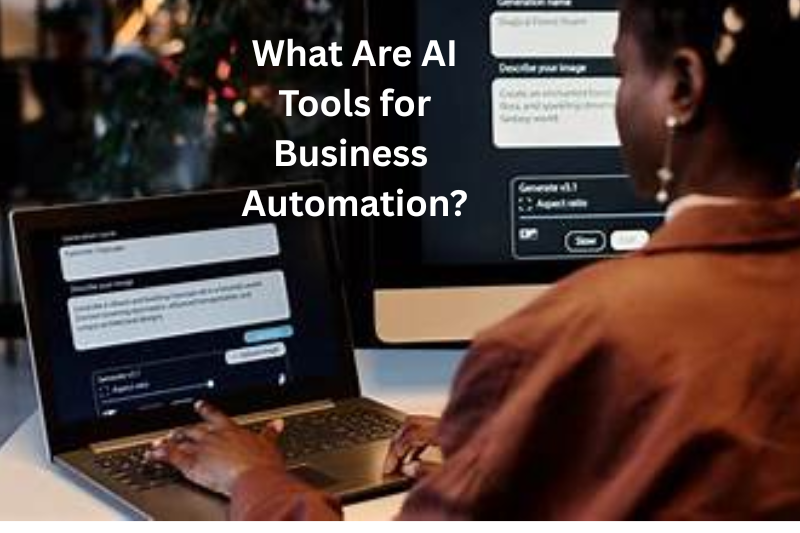
AI tools for business automation are software systems powered by artificial intelligence that perform business tasks automatically with little or no human involvement. These tools learn from data, recognize patterns, and make decisions based on logic and previous behavior.
Instead of a human entering data, replying to every customer message, or manually creating reports, AI can do these tasks automatically. Over time, these tools become smarter as they analyze more data.
In simple words: AI + Automation = Smart work instead of hard work.
Why Businesses Are Adopting AI Tools for Business Automation
Businesses today face high competition and rising costs. Customers also expect faster service and personalized experiences. AI tools help businesses meet these demands by working faster and more accurately than humans for repetitive tasks.
Companies use AI automation to:
- Save time
- Improve efficiency
- Reduce workload
- Increase profits
- Improve customer satisfaction
Even small businesses are now using AI because many tools are affordable and easy to use.
Major Areas Where AI Tools for Business Automation Are Used
1. Customer Support
AI chatbots are one of the most common examples of AI tools for business automation. They can:
- Answer frequently asked questions
- Handle complaints
- Track orders
- Provide 24/7 support
This reduces the workload of human agents and ensures customers get quick responses.
2. Marketing and Advertising
AI helps automate marketing tasks such as:
- Sending personalized emails
- Scheduling social media posts
- Creating product recommendations
- Running targeted ads
AI analyzes customer behavior and predicts what customers are likely to buy, making marketing more effective.
3. Sales Automation
Sales teams use AI to:
- Identify potential customers
- Score leads
- Send automatic follow-ups
- Predict future sales
This allows salespeople to focus on serious buyers instead of wasting time on low-quality leads
4. Finance and Accounting
AI tools can:
- Generate invoices
- Track expenses
- Detect fraud
- Forecast profits
- Automate payroll
This reduces human error and improves financial accuracy.
5. Human Resources (HR)
In HR departments, AI helps with:
- Resume screening
- Interview scheduling
- Employee onboarding
- Attendance tracking
- Performance analysis
This speeds up recruitment and employee management processes.
6. Supply Chain and Operations
AI tools for business automation can:
- Predict product demand
- Manage inventory
- Optimize delivery routes
- Reduce wastage
This improves efficiency and lowers operational costs.
Benefits of AI Tools for Business Automation
Let’s talk about the biggest advantages of using AI tools for business automation.
1. Saves Time
AI can perform tasks in seconds that may take humans hours. For example, generating reports, responding to customer queries, and analyzing data can be done almost instantly. This allows business owners and employees to focus on decision-making and innovation instead of routine work.
2. Increases Productivity
When machines handle repetitive tasks, humans can work on higher-value activities like planning, customer relationships, and creativity. This leads to higher overall productivity.
3. Reduces Errors
Humans make mistakes, especially when doing the same task repeatedly. AI follows programmed rules and data patterns, reducing errors in:
- Accounting
- Data entry
- Inventory management
- Order processing
4. Improves Customer Experience
AI chatbots and recommendation systems provide:
- Faster responses
- Personalized suggestions
- 24/7 service
This makes customers feel valued and improves brand reputation.
5. Cuts Operational Costs
By automating tasks, businesses can reduce the need for large teams to handle basic work. This lowers salary costs and improves profit margins.
6. Better Decision Making
AI tools analyze huge amounts of data and provide insights that humans may miss. This helps managers make smarter decisions based on facts rather than guesswork.
You may also like to read these posts:
AI Solutions for Small Businesses
AI Tools for Business Automation
Affordable AI Solutions Online
Drawbacks of AI Tools for Business Automation
While AI tools for business automation offer many benefits, they also come with some challenges.
1. High Initial Cost
Setting up AI systems can be expensive. Businesses may need to invest in:
- Software
- Hardware
- Training
- Integration with existing systems
This can be difficult for small businesses with limited budgets.
2. Lack of Human Touch
AI cannot fully understand emotions, tone, or complex human feelings. Over-automation may make customer service feel cold or robotic, which can harm relationships with customers.
3. Job Displacement
Automation can replace certain job roles, especially those based on repetitive tasks. This may cause fear of unemployment among workers and create social challenges.
4. Data Privacy and Security Risks
AI systems depend on data. If data is not protected properly, it can lead to:
- Data breaches
- Privacy violations
- Misuse of customer information
Businesses must ensure strong cybersecurity measures.
5. Dependence on Technology
Too much dependence on AI can be risky. If systems fail or produce wrong results, businesses may face major disruptions.
How to Start Using AI Tools for Business Automation
If you are new to AI, don’t try to automate everything at once. Start slowly:
- Identify repetitive tasks
- Choose one department (like customer service or marketing)
- Select a suitable AI tool
- Train your staff
- Monitor performance
- Improve gradually
This step-by-step approach reduces risk and improves success.
Future of AI Tools for Business Automation
The future of AI tools for business automation looks very promising. These tools are becoming:
- More affordable
- More accurate
- Easier to use
- More human-like in communication
In the future, businesses will rely on AI not just for automation but also for strategic planning and innovation. Companies that adopt AI early will gain a strong competitive advantage.
Conclusion
In today’s fast-paced business world, doing everything manually is no longer practical. AI tools for business automation help organizations save time, reduce errors, improve customer service, and cut costs. They allow humans to focus on creative and strategic work instead of boring repetitive tasks.
However, businesses must also consider the drawbacks such as cost, data security, and loss of human touch. The key is to use AI wisely and balance automation with human involvement. When used correctly, AI tools for business automation can transform how businesses operate and help them grow in a smarter and more efficient way.
FAQs About AI Tools for Business Automation
1. What are AI tools for business automation?
Answer: AI tools for business automation are software systems powered by artificial intelligence that automatically perform repetitive business tasks. These tasks can include customer support, marketing, sales follow-ups, accounting, HR management, and more. They save time, reduce errors, and improve efficiency.
2. How can AI tools help my business?
Answer: AI tools can help businesses in several ways:
Automating repetitive tasks
Reducing manual errors
Improving customer service
Analyzing data for better decision-making
Increasing productivity and efficiency
3. Are AI tools expensive to implement?
Answer: Some AI tools can be costly initially, especially for enterprise-level systems. However, many affordable or subscription-based tools are available for small and medium-sized businesses. The long-term savings in time, cost, and productivity often outweigh the initial investment.
4. Can AI tools replace employees?
Answer: AI tools are designed to assist employees, not completely replace them. They handle repetitive tasks, allowing humans to focus on creative and strategic work. However, in some areas with routine tasks, job roles may evolve or shift due to automation.
5. Which business areas can be automated with AI?
Answer: AI tools can be used in multiple areas, including:
Customer support (chatbots, helpdesk automation)
Marketing (email campaigns, social media scheduling, personalized ads)
Sales (lead scoring, follow-ups, predictive analytics)
Finance and accounting (invoicing, expense tracking, fraud detection)
Human resources (resume screening, onboarding, attendance management)


